A pixie mullet is one of those cuts that quietly signals confidence before you say a word. The front stays cropped and controlled, while the back keeps just enough length to shift the silhouette. Stylists often use it to soften sharp features or add edge to overly neat short cuts. What surprises most people is how wearable it becomes once texture is introduced. It is not about extremes, but balance, movement, and intentional contrast in shape.
Soft Feathered Pixie Mullet
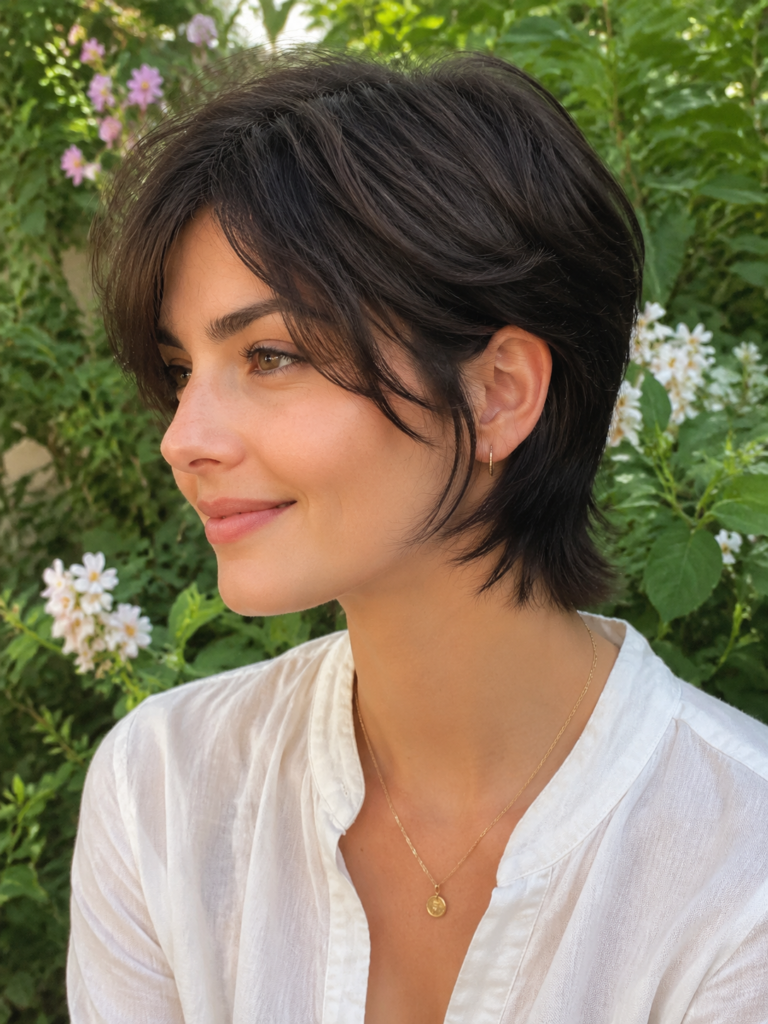
This version focuses on lightness through every section of the cut. The crown is softly layered to reduce heaviness while maintaining shape control. The back tapers into fine feathered ends that move easily with minimal styling effort. Front pieces sit slightly above the cheek area, blending gently into the sides. A light cream helps define separation without stiffness, keeping the overall finish soft and naturally relaxed.
Choppy Textured Pixie Mullet
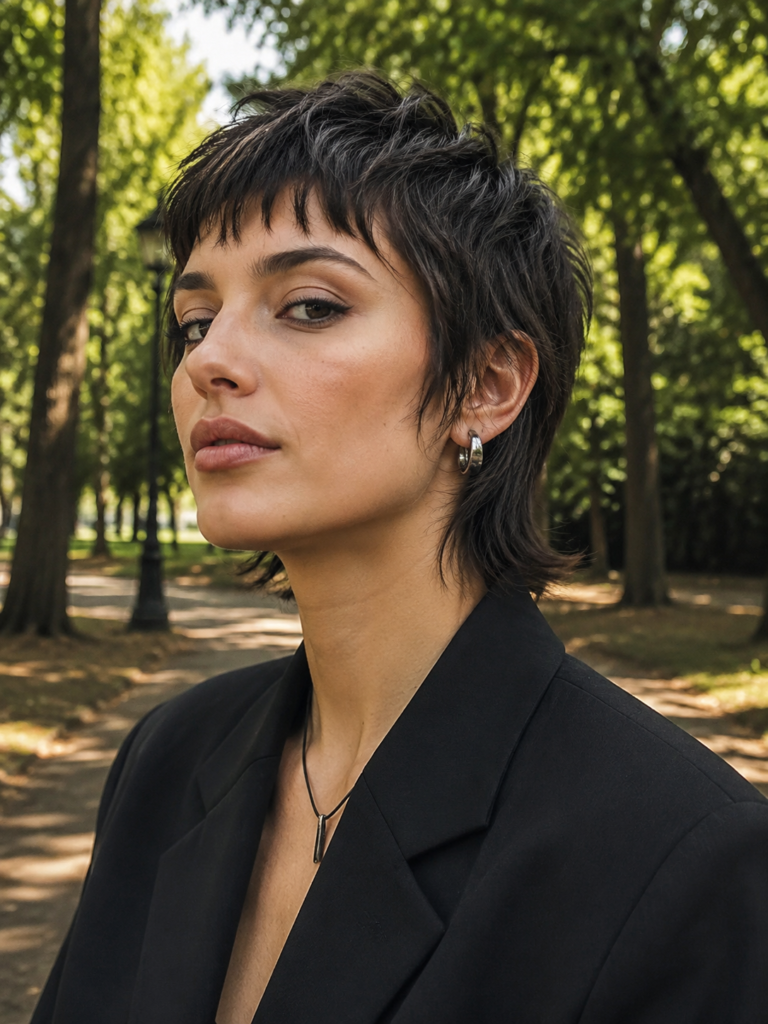
Here the structure is intentionally broken up to create visible separation between layers. The top is cut into uneven choppy pieces that encourage lift and movement. The mullet section remains subtle but distinct, adding contrast without overwhelming the shape. Styling works best with a matte paste worked through dry hair, enhancing piecey definition and giving the entire cut a slightly undone, modern edge.
Curly Pixie Mullet
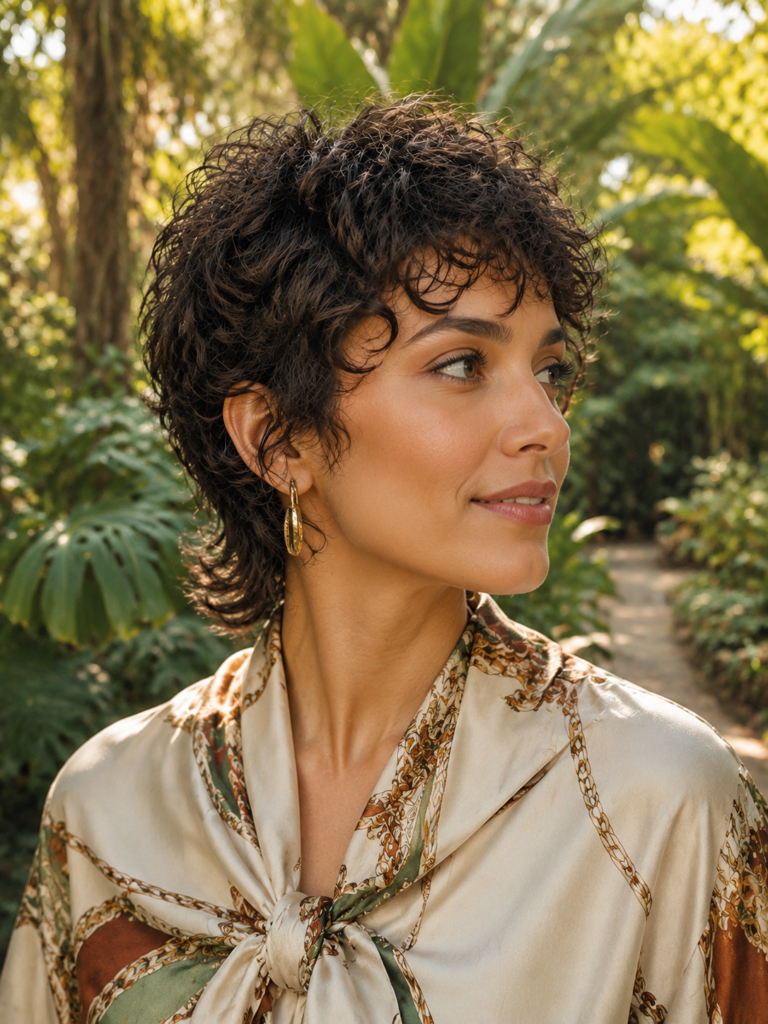
Natural curls give this cut its structure, especially when layers are shaped to control bulk. The front stays shorter to open the overall silhouette, while the back allows curls to stack softly. Internal layering prevents heaviness at the crown. Hydration is essential, so leave-in conditioner supports bounce and definition. The result feels full of movement, yet still balanced and easy to maintain.
Sleek Tapered Pixie Mullet
This variation prioritizes clean lines and smooth transitions between lengths. The sides are closely tapered and blend seamlessly into a controlled back section. The top remains lightly layered to maintain shape without excess volume. A smoothing serum helps reduce flyaways and enhances polish. The final look feels refined but still carries the distinct structure of the mullet silhouette.
Shaggy Pixie Mullet
A shag influence softens the structure and introduces more natural movement. Layers are heavily textured through the crown, allowing the hair to fall in varied directions. The fringe is slightly broken, avoiding harsh definition and keeping everything relaxed. The back maintains light length for contrast. A texturizing spray enhances separation while preserving softness and flexible shape throughout the day.
Micro Fringe Pixie Mullet
The micro fringe instantly changes the focal point of this cut. It sits short and blunt above the brows, creating a strong visual anchor. The crown remains textured but controlled to avoid overwhelming the front detail. The back tapers gently into a subtle extension. Styling wax helps define the fringe while keeping its edges clean and intentional without stiffness.
Soft Undercut Pixie Mullet
This style introduces hidden contrast through an undercut beneath the top layers. The crown remains soft and slightly lifted, while the undercut removes bulk and sharpens the silhouette. The mullet section stays wispy rather than heavy, maintaining movement. When worn loose, the cut feels subtle, but tucked styling reveals the structured contrast between top and sides.
Wavy Air-Dried Pixie Mullet
This version works with natural wave patterns rather than forcing structure. Layers are cut to enhance movement from the crown into the back. The front frames the face softly without strict shaping. A salt spray applied before air-drying helps create separation and bend. The result is effortless texture with a relaxed finish that still holds a defined silhouette.
Edgy Razor-Cut Pixie Mullet
Razor cutting introduces sharper texture and more fragmented ends throughout the shape. The back section becomes lighter and slightly irregular, adding visual interest. The crown is reduced in weight to avoid heaviness and improve movement. Styling paste helps define direction and separation, giving the cut a more fashion-forward, slightly undone finish with strong visual edge.
Blonde Contrast Pixie Mullet
Color placement plays a key role in emphasizing structure. Lighter tones concentrated through the top and fringe highlight layering and movement. The back remains deeper in tone, creating contrast that enhances the mullet effect. Maintenance requires toning care to preserve brightness and prevent brassiness, especially when lifting darker natural hair for this dimensional result.
Long Tail Pixie Mullet
This variation extends the back section further than a traditional pixie mullet. The front remains compact and controlled, while the back gradually elongates into a soft tail. Layers are blended carefully to maintain smooth transitions. A lightweight cream helps support shape while allowing natural movement through the extended length without stiffness or heaviness.
Rounded Volume Pixie Mullet
Volume is concentrated at the crown to create a softly rounded silhouette. The sides stay controlled to prevent excessive width, keeping balance intact. Internal layering supports lift without visible stacking. Blow-drying with a round brush enhances curvature and smoothness. The back tapers gently, preserving the mullet structure while maintaining a soft overall profile.
Side-Swept Fringe Pixie Mullet
A deep side sweep shifts the framing of the entire cut. The fringe blends into longer top layers, creating diagonal movement across the face. This asymmetry softens the structure while maintaining definition. The back continues the mullet extension subtly. A lightweight mousse helps guide direction while preserving flexibility and natural movement.
Wet-Look Pixie Mullet
This styling approach compresses texture into a sleek, glossy finish. Layers remain visible but are smoothed into tighter alignment. The back retains length but sits closer to the neck. Gel or styling cream creates the wet effect, enhancing structure and giving the cut a sculpted, controlled appearance without losing its shape identity.
Soft Curtain Pixie Mullet
Curtain-inspired framing brings balance to the front of this cut. The fringe parts gently and blends into layered sides that soften facial contours. The transition into the back remains gradual rather than abrupt. Blow-drying with fingers encourages natural separation. The overall effect feels relaxed while still maintaining clear structural intention.
Tousled Minimal Pixie Mullet
This version keeps the structure simple while allowing natural texture to lead. Layers are minimal but strategically placed to encourage movement. The back remains subtle and wearable rather than exaggerated. A dry texturizing spray is enough for styling, letting the cut fall naturally without heavy manipulation or over-styling.